
Embarking on snipe marsh calling adventures offers outdoor enthusiasts a thrilling blend of skill, patience, and connection with nature. Snipe, those elusive shorebirds known for their erratic flight and distinctive winnowing calls, thrive in the damp, grassy expanses of marshes and wetlands. Calling snipe—using specialized techniques to mimic their sounds and lure them closer—requires finesse, especially in the unpredictable terrain of marshes where mud, water, and thick vegetation can turn a simple hunt into a full-body workout. Whether you’re a seasoned hunter or a budding birder looking to enhance your wildlife observation, mastering snipe calling tips can elevate your experience, making each flush of wings a rewarding triumph.
Why does this matter? Snipe hunting is not just about the bag limit; it’s about immersing yourself in seasonal rhythms, from the crisp autumn mornings when migratory snipe arrive to the subtle calls echoing over fog-shrouded bogs. These birds are legal game in many regions, but success hinges on understanding their habits and the marsh environment. With the right tips, you can navigate challenging conditions, respect wildlife regulations, and create memorable outings that highlight conservation efforts. As marshes face pressures from development and climate change, honing your calling skills promotes ethical engagement with these vital ecosystems. Dive into our top 10 tips to sharpen your approach and make your next marsh excursion unforgettable.
Top 10 Snipe Marsh Calling Tips
#1 Master the Basic Snipe Call Mimicry
To start, focus on replicating the snipe’s signature ‘sca-pe’ call, a sharp, two-note whistle that signals alarm or attraction. Practice with a simple mouth call or reed device to produce this sound authentically—too shrill, and you’ll spook them; too soft, and they won’t hear. In marsh settings, like the coastal wetlands of the Atlantic Flyway, use this during early dawn when snipe are most vocal, typically from September to November in the U.S.
Combine calls with subtle movements to avoid detection in the tall reeds. Beginners should record wild snipe calls via apps like Merlin Bird ID for reference, ensuring your mimicry blends seamlessly with the natural chorus.
#2 Scout Ideal Marsh Locations
Target marshes with a mix of shallow water, mudflats, and emergent vegetation, such as those found in Minnesota’s prairie potholes or Delaware’s coastal impoundments. Snipe prefer areas with 2-6 inches of water and abundant invertebrates for feeding. Use topo maps or apps like onX Hunt to identify public lands requiring no permit for scouting, but always check state regulations for hunting access.
Visit during the off-season to map feeding zones without disturbing birds, noting wind directions that carry your calls effectively across the open spaces.
#3 Time Your Calls with Migration Patterns
Snipe migration peaks in fall, so align your outings with local patterns—late October in the Midwest, for instance. Call during low-light periods like dawn or dusk when snipe are active but visibility is low, reducing the chance of detection. Avoid midday heat in southern marshes, where birds retreat deeper into cover.
Monitor weather apps for incoming fronts that boost migration; a cold snap can bring flocks overhead, perfect for practicing long-range calling techniques.
#4 Use Terrain to Amplify Calls
In expansive marshes, position yourself on slight rises or at edges where sound travels over water without much obstruction. The natural echo from surrounding cattails can make your calls seem like multiple birds, drawing snipe in curiosity. In places like California’s Sacramento Delta, use the wind to your advantage by calling upwind to cover more ground.
Test call volume in advance—marshes can muffle sounds, so a slightly louder ‘drumming’ mimicry for their aerial display works well in foggy conditions.
#5 Gear Up with Waterproof Essentials
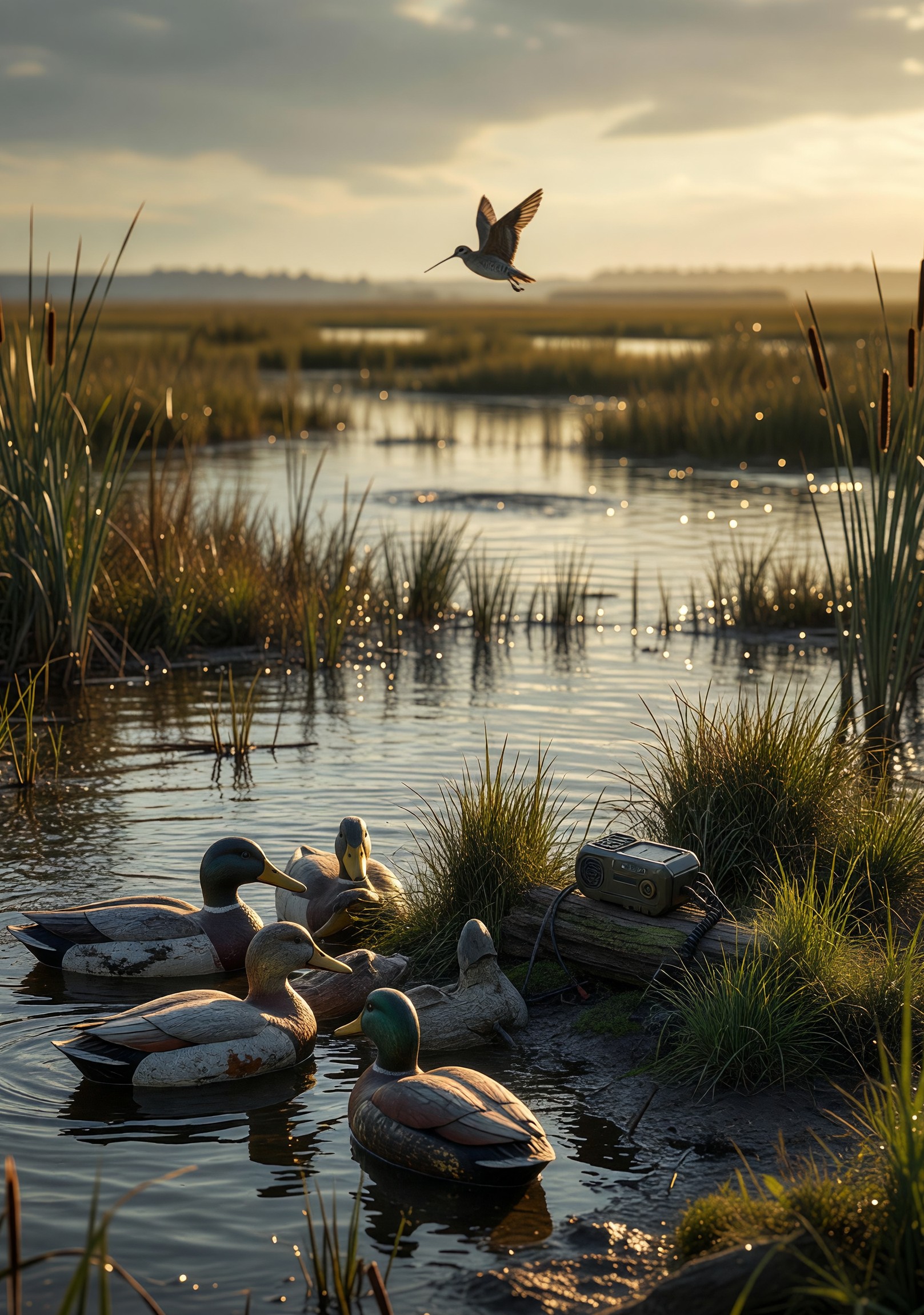
Essential gear includes hip waders for navigating mucky terrain and a waterproof call case to protect your tools from splashes. Opt for camo patterns that match marsh greens and browns, like those in the Everglades. A lightweight decoy set can complement calls by providing visual cues in open areas.
Don’t forget insect repellent and a GPS device; marshes like those in Louisiana can disorient quickly, and proper gear ensures safety during extended sessions.
#6 Incorporate Decoy Strategies with Calls
Pair calls with motion decoys that bob in the water, simulating feeding snipe. Place them 20-30 yards out in shallow marsh pools to create a realistic scene. In the Great Lakes region’s wetlands, this combo during November hunts can increase response rates by drawing birds within shotgun range.
Alternate call rhythms—short bursts followed by pauses—to mimic a flock’s conversation, encouraging curious snipe to investigate the decoys.
#7 Adapt to Weather and Wind Conditions
Windy days in coastal marshes, such as those in New Jersey, can carry calls farther but also mask responses, so use sharper tones. Calm, overcast days are ideal for subtle calling in inland bogs. Always face into the wind to project sound directly toward potential bird positions.
Prepare for rain by using synthetic calls that won’t warp; wet conditions in Pacific Northwest marshes demand quick adaptations to keep your setup functional.
#8 Practice Stealth and Patience
Movement is the enemy in snipe calling—freeze after each call sequence to let the marsh settle. Snipe have keen eyes, so in dense areas like Florida’s sawgrass marshes, use natural blinds formed by reeds. Patience pays off; it can take 10-15 minutes of intermittent calling to elicit a response during peak season.
Track your sessions in a journal to refine timing, noting how long birds take to approach in different marsh types.
#9 Respect Regulations and Ethics
Always secure a hunting license and migratory bird stamp; limits vary, like 8 snipe per day in many states. In protected areas such as national wildlife refuges, calling is often for observation only—check with the U.S. Fish and Wildlife Service. Ethical calling avoids over-pressure on populations, promoting sustainability.
Join local Audubon chapters for guided marsh trips that teach legal boundaries and conservation-focused techniques.
#10 Refine with Audio Feedback Tools
Use smartphone recorders to capture your calls in the field and compare them to authentic snipe audio from sources like Cornell Lab’s Macaulay Library. In remote Alaskan tundra marshes, this self-review helps adjust pitch for better authenticity during spring breeding seasons.
Share recordings in online forums for expert feedback, accelerating your skill development without repeated trial-and-error in the field.
Key Takeaways
- Always prioritize safety by wearing life vests in deeper marsh waters and informing someone of your plans.
- Plan outings around legal seasons and obtain necessary permits to avoid fines.
- Invest in durable, weatherproof gear like breathable waders to handle marsh conditions comfortably.
- Practice calls at home to build confidence before heading into the field.
- Observe Leave No Trace principles by packing out all waste from sensitive wetland areas.
- Monitor local weather and bird migration reports for optimal timing.
- Combine calling with ethical hunting practices to support snipe conservation efforts.
How to Get Started
To kick off your snipe marsh calling journey, begin by researching local regulations through your state’s wildlife agency website and securing a basic hunting license if applicable. Invest in an entry-level snipe call, such as a wooden reed model from brands like Faulk’s, and spend evenings practicing mimicry in a quiet outdoor space. Join a beginner’s workshop through organizations like Ducks Unlimited or local birding clubs for hands-on guidance.
Next, scout nearby marshes using free tools like Google Earth or iBird Pro app to identify accessible spots. Start with short, early-morning sessions during the off-season to build familiarity without pressure. Track your progress, adjust based on feedback, and gradually incorporate advanced techniques like decoys. With consistent effort, you’ll soon be luring snipe successfully—happy calling!