
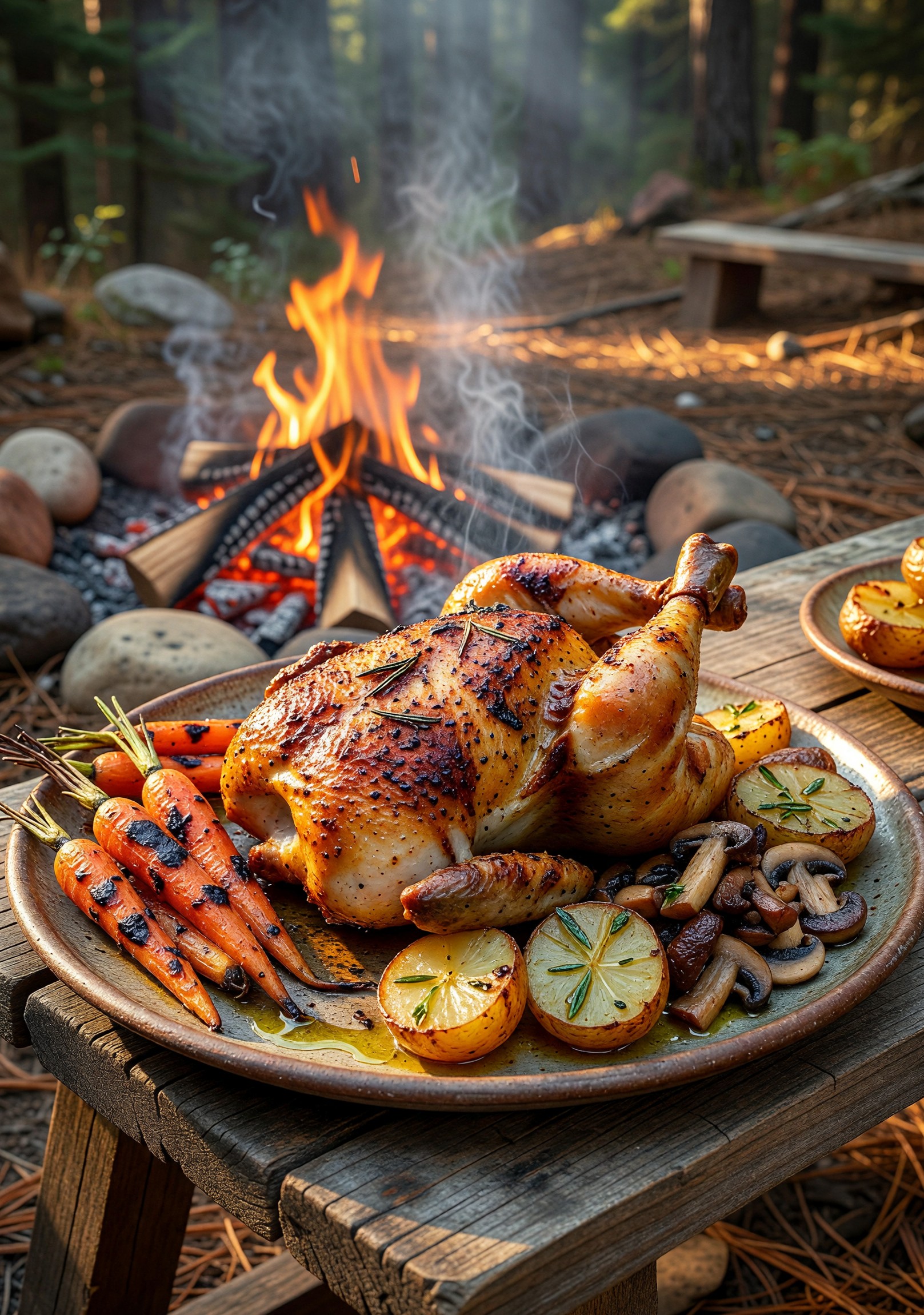
Imagine the sun dipping low behind jagged mountain peaks, casting a golden glow over your campsite as the first stars begin to wink in the twilight sky. The air is crisp with the scent of pine and earth, and your campfire crackles invitingly, its flames dancing like old friends gathered for a feast. In this serene wilderness setting, there’s nothing quite like the primal thrill of spit-roasting a chicken over those glowing embers. It’s a method as old as time itself, harking back to our ancestors who mastered fire to transform simple ingredients into mouthwatering meals. Why is spit-roasted chicken perfect for campfire cooking? For starters, it requires minimal gear – just a sturdy spit and some ingenuity – making it ideal for backpackers, hunters, or anyone craving that smoky, charred flavor without the fuss of modern ovens. The slow rotation ensures even cooking, locking in juices while the skin crisps to a golden perfection, infused with the earthy aroma of woodsmoke. Picture the sizzle of fat dripping onto the coals, sending up bursts of fragrant steam that mingle with herbs and spices. It’s not just dinner; it’s an experience that bonds you with nature, turning a basic bird into a centerpiece of adventure. Whether you’re solo in the backcountry or sharing stories with a group, this recipe delivers tender, flavorful meat that flakes off the bone, paired with the satisfying pop of a cold drink by the fire. Get ready to elevate your outdoor culinary game – the wilderness is calling, and your taste buds are in for a treat!
Recipe Overview
Prep Time: 20 minutes
Cook Time: 1.5 to 2 hours
Servings: 4-6
Difficulty Level: Intermediate (requires fire management skills)
Special Equipment Needed: A metal spit or rotisserie rod (DIY from green wood branches or a store-bought camping spit), tripod or forked sticks to suspend it over the fire, long-handled tongs, and a basting brush. For safety, use heat-resistant gloves.
Ingredients List
- 1 whole chicken (4-5 pounds), giblets removed – opt for free-range for better flavor; if foraging, ensure it’s fresh and cleaned thoroughly in stream water.
- 2 tablespoons olive oil or melted butter – use oil for easier campfire handling as it doesn’t solidify in cooler temps.
- 4 cloves garlic, minced – or wild garlic if available in your area for an authentic twist.
- 2 tablespoons fresh rosemary and thyme, chopped (or 1 tablespoon dried) – substitute with foraged herbs like sage to adapt to your surroundings.
- 1 lemon, quartered – for stuffing; use lime if lemons aren’t packed light.
- Salt and black pepper to taste – kosher salt works best; add smoked paprika for extra campfire essence if you have it.
- Optional: 1 onion, quartered, for stuffing to enhance moisture and flavor.
Step-by-Step Instructions
-
Build your campfire: Start with a teepee structure of dry hardwood like oak or hickory for steady, hot coals. Let it burn down to a solid bed of embers – this takes about 30-45 minutes. Position your spit setup (tripod or forked branches) about 18-24 inches above the coals to allow for rotation without scorching.
-
Prepare the chicken: Rinse the bird under clean water (use a portable filter if in the wild) and pat dry with a clean cloth or paper towel. In a bowl, mix the oil, garlic, herbs, salt, and pepper to form a rub. Loosen the skin over the breasts and thighs, then rub the mixture generously inside and out. Stuff the cavity with lemon and onion quarters for aromatic steam during cooking. Truss the legs with twine to keep the shape compact – this ensures even roasting over the uneven campfire heat.
-
Skewer the chicken: Thread the spit rod through the chicken’s cavity, securing wings and legs with kitchen twine or wire to prevent flapping. Balance it so the weight is even – test by holding horizontally; adjust as needed to avoid lopsided cooking.
-
Start roasting: Secure the spit over the fire and begin rotating it manually every 5-10 minutes, or use a simple hand-crank if available. Baste every 15 minutes with any leftover rub mixed with pan drippings (collect in a foil tray below). The skin should turn golden and crispy, releasing a savory, herby aroma that fills the campsite. Maintain the fire by adding small logs to keep coals consistent – aim for medium heat, around 325-350°F if you have a thermometer.
-
Check for doneness: After 1.5 hours, pierce the thickest part of the thigh with a knife; juices should run clear, not pink. Use a meat thermometer if possible (internal temp 165°F). The texture will be juicy inside with a crackling exterior, and the smoky scent will be irresistible.
-
Rest and serve: Remove from the spit and let rest under foil for 10 minutes. Carve at the fire’s edge, enjoying the warm glow and the sounds of nature. Pair with campfire potatoes or fresh foraged greens for a complete meal.
Key Takeaways
- Always prioritize safety: Keep a bucket of water or sand nearby for fire control, and never leave the roasting unattended to avoid flare-ups from dripping fat.
- For even cooking in windy conditions, shield the fire with rocks or a windbreak to maintain consistent heat.
- Variation: Add root vegetables like potatoes wrapped in foil around the coals for a one-fire meal – they absorb that delicious smoky flavor.
- If the chicken browns too quickly, raise the spit higher or bank the coals to one side for indirect heat.
- Storage tip: Leftovers can be wrapped in foil and refrigerated for up to 3 days; reheat over embers for breakfast tacos on your next trip.
- Pro tip: Use hardwoods for cleaner smoke; avoid softwoods like pine that can impart a bitter taste.
- Adapt for smaller groups: Halve the recipe with a cornish hen for quicker cooking in under an hour.
So, fellow outdoor adventurer, don’t just dream about that perfect campfire feast – pack your spit, gather your crew, and fire it up this weekend. Your spit-roasted chicken is waiting to become the highlight of your next wilderness escape!