
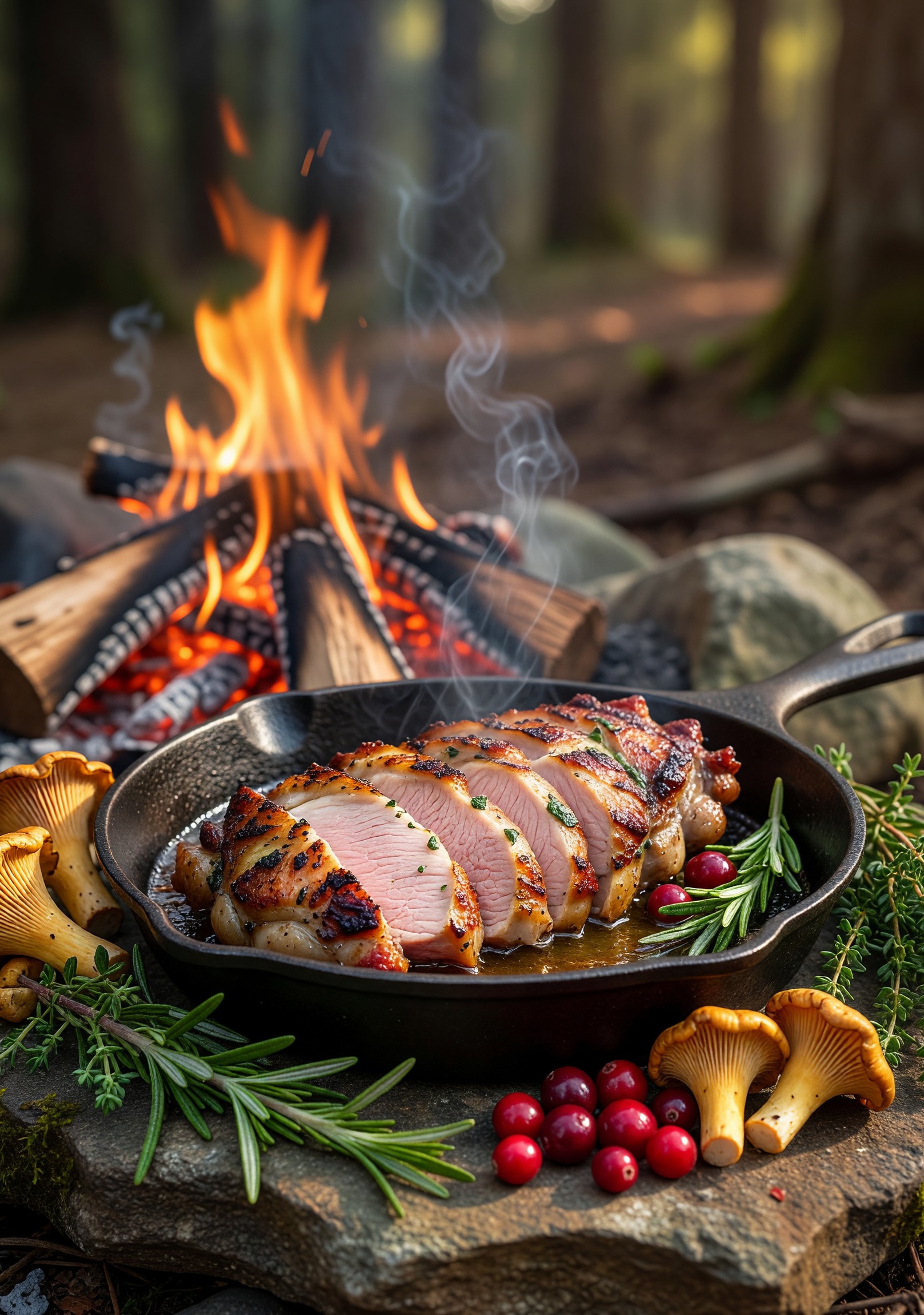
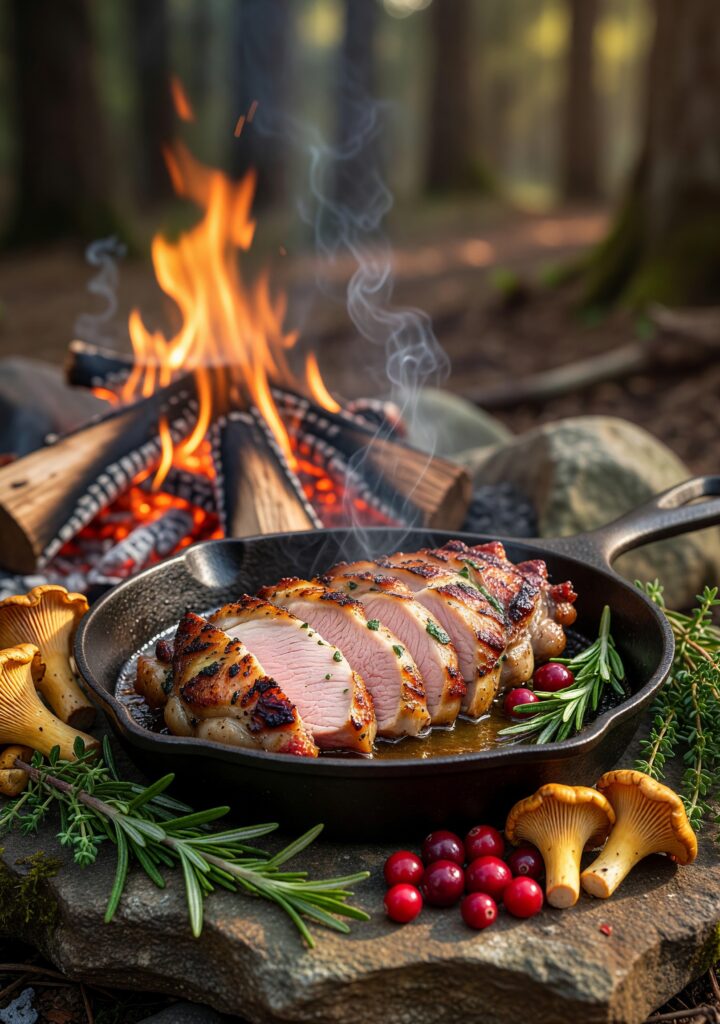
Imagine the crisp bite of autumn air nipping at your cheeks as you settle into your campsite deep in the whispering woods. The sun dips low, casting golden hues over the rustling leaves, and your campfire crackles to life, its warm glow pushing back the encroaching dusk. You’ve just returned from a successful hunt, your game bag heavy with plump grouse—wild, free-range birds that embody the essence of the outdoors. Now, it’s time to transform that fresh catch into a meal that captures the soul of wilderness cooking. Pan-seared grouse is the perfect campfire recipe for adventurers like you: it’s quick, requires minimal gear, and lets the natural, gamey flavors shine through with a crispy sear that only an open flame can provide.
Why does this dish sing around the fire? Grouse, with its tender dark meat and subtle earthiness, pairs beautifully with the smoky kiss of embers, creating a symphony of textures—from the juicy interior to the caramelized crust. No fancy kitchen needed; just a trusty cast iron skillet perched on the grate, sizzling away as the aromas of seared poultry mingle with pine-scented smoke. It’s field-tested by hunters and campers who’ve learned that over a hot fire, patience yields perfection. This recipe builds excitement because it’s not just food—it’s a ritual, a way to connect with nature’s bounty after a day of exploration. Whether you’re solo in the backcountry or sharing stories with fellow outdoor enthusiasts, pan-seared grouse turns a simple supper into an unforgettable feast. Get ready to savor the wild side of campfire cuisine, where every bite tells a tale of adventure.
Recipe Overview
Prep Time: 15 minutes
Cook Time: 20 minutes
Servings: 4
Difficulty Level: Intermediate (requires handling game meat and managing campfire heat)
Special Equipment Needed: Cast iron skillet (10-12 inch), campfire grate or tripod for stable cooking, long-handled tongs, and a sharp knife for field dressing. A meat thermometer is optional but helpful for safety.
Ingredients List
- 4 grouse breasts (about 1-1.5 lbs total; if whole birds, use boneless portions from fresh or field-dressed grouse—substitute pheasant if grouse unavailable)
- 2 tablespoons high-smoke-point oil (like avocado or grapeseed; butter works but may burn over direct flames—adapt by mixing with oil for campfire use)
- 1 teaspoon salt (kosher or sea salt for better adhesion in humid outdoor conditions)
- 1/2 teaspoon black pepper (freshly ground; add wild foraged herbs like thyme if available)
- 2 cloves garlic, minced (or garlic powder if fresh isn’t practical in the field)
- Optional: 1/2 cup sliced wild mushrooms or onions for added depth (forage sustainably or bring prepped)
- Lemon wedges for serving (portable and brightens the gamey flavor)
Step-by-Step Instructions
-
Prepare your campfire: Build a steady fire with hardwoods like oak for consistent coals. Let it burn down to medium-hot embers (you should be able to hold your hand 6 inches above for 4-5 seconds). Position your grate or tripod to create an even cooking surface, about 4-6 inches above the flames for controlled heat.
-
Prep the grouse: Rinse the breasts under cool water if field-fresh, pat dry thoroughly with a clean cloth or paper towels—moisture causes steaming instead of searing. Season both sides generously with salt and pepper. If adding garlic, rub it on now. Let sit for 10 minutes at room temp to take the chill off, which helps even cooking in variable campfire conditions.
-
Heat the skillet: Place your cast iron skillet on the grate over the embers. Add the oil and let it shimmer and lightly smoke (about 2-3 minutes). Test heat by flicking a drop of water—it should sizzle and evaporate instantly. Safety note: Keep a bucket of water nearby for any flare-ups.
-
Sear the grouse: Lay the breasts in the hot skillet, skin-side down if applicable, without crowding (work in batches if needed). Sear for 4-5 minutes per side, using tongs to flip—listen for the satisfying hiss and watch for a golden-brown crust forming. The aroma of searing meat will waft through the campsite, drawing everyone closer. If using mushrooms or onions, add them after flipping for a quick sauté.
-
Check doneness: Aim for an internal temperature of 160°F (use a thermometer poked into the thickest part). Avoid overcooking—grouse is lean and can dry out fast over flames. Remove to a plate and tent with foil to rest for 5 minutes, allowing juices to redistribute for that tender, succulent texture.
-
Serve: Squeeze fresh lemon over the top for a zesty contrast to the rich, smoky flavors. Pair with foraged greens or campfire-baked potatoes for a full outdoor meal, enjoyed under the stars.
Key Takeaways
- Always prioritize safety: Maintain a clear zone around the fire, never leave it unattended, and use heat-resistant gloves to handle hot cast iron.
- Field-test tip: Grouse cooks quickly due to low fat content—err on underdone and carry over to finish with resting.
- Adapt for campfire variability: If flames flare, move the skillet to cooler coals; rotate for even heat.
- Variation: For a heartier dish, deglaze the pan with a splash of broth or wine (if packing light) to make a quick sauce.
- Storage advice: Leftovers keep in a cooler for up to 2 days; reheat gently over low embers to avoid toughness.
- Sensory perk: The crackle of the fire and earthy scent elevate the meal—savor the moment as much as the food.
- Ethical note: Hunt responsibly and check local regulations for sustainable grouse harvesting.
Now that you’ve got this pan-seared grouse recipe in your back pocket, pack your gear, stoke that fire, and head into the wild. Your next campfire meal awaits—try it and taste the thrill of the hunt!